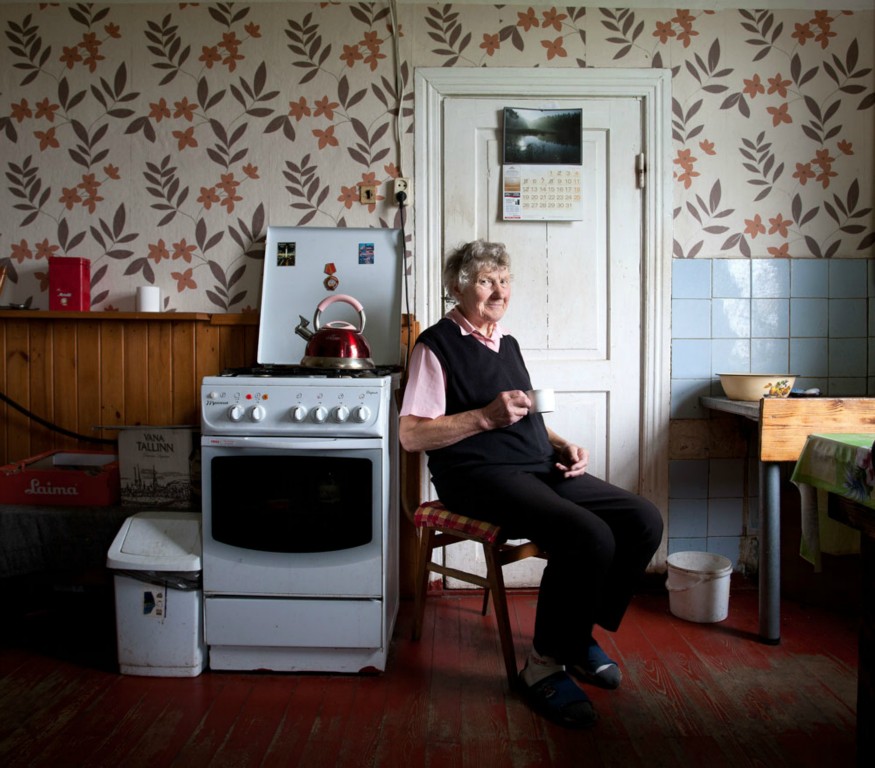
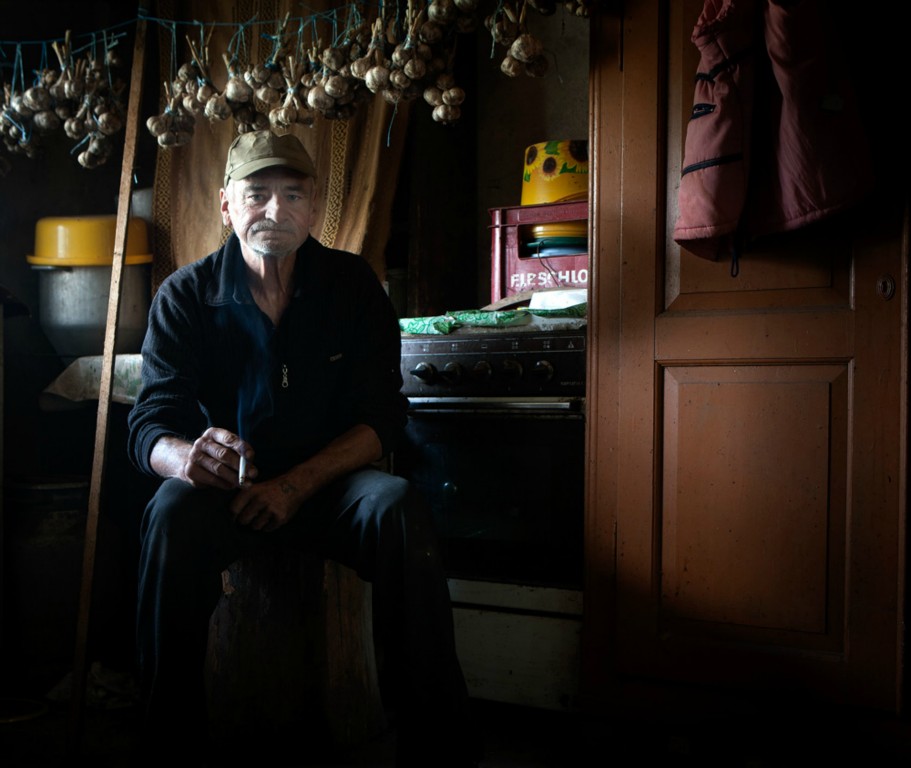
Jānis Razgals (b.1939); “My mother gave birth to me in a field just three months after war was declared. When the Germans arrived in 1941 they were respected by everyone as they dressed well and were more cultured. They always brought chocolate and other treats for the children. My father was forcibly conscripted by the Nazi’s and was captured by the Red Army after the German defeat in the Courland Peninsula. From here he was brought to Pecli and marched to Skrunda where he was put on a train and sent to work in the gold mines of Russia, we didn't see him again until he returned home in 1955”
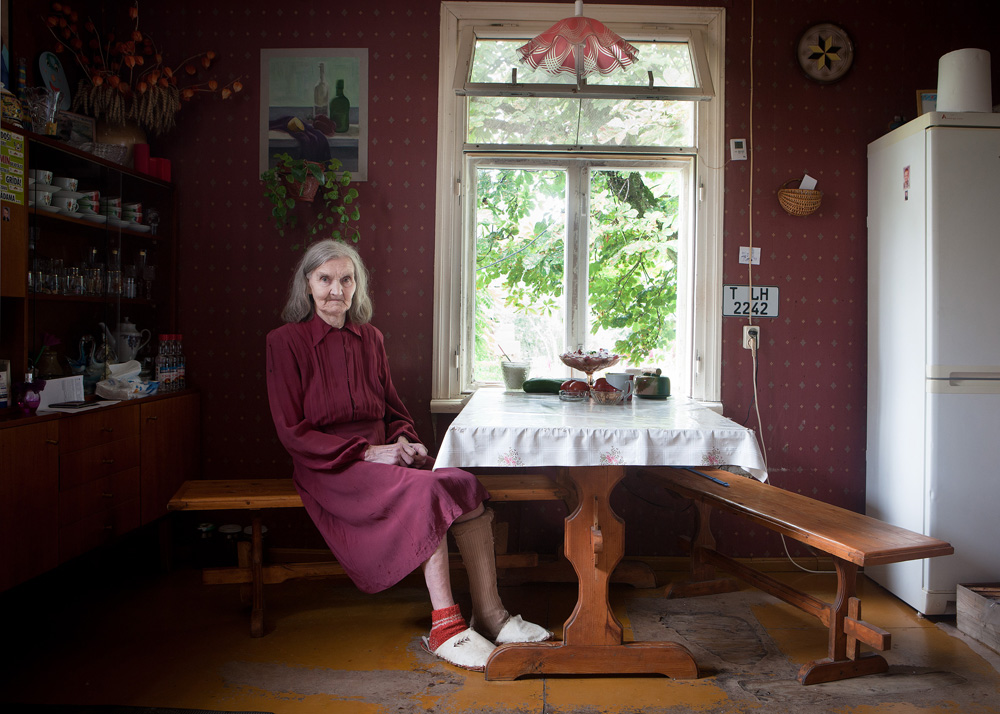
Sabīne Norvaiša (b. 1932) ; Sabīne lives alone now. She has four children and eleven grandchildren. Three of them live nearby and help her, while her son Jānis has emigrated to Ireland. He now lives in Cahir, County Tipperary, with his wife and two children. In a telephone conversation, Jānis explained: “I came to Ireland to get a job and make money. I don’t think I will ever return to Latvia to live, as my children are settled here and go to school. Ireland is our home now.” It was estimated that in 2011, over thirty thousand Latvians were living in Ireland.
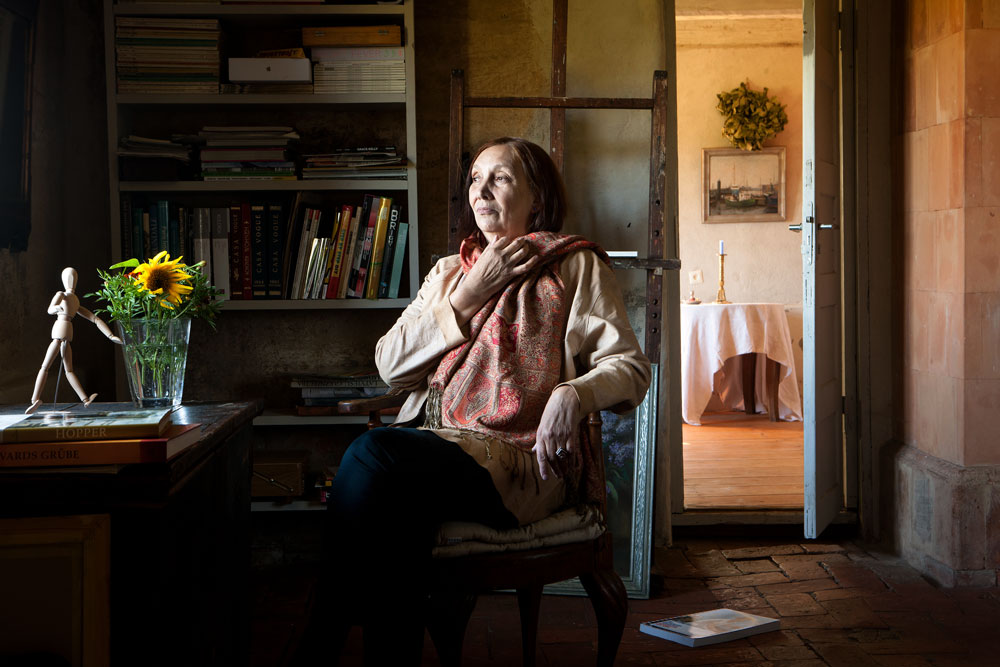
Margita Margita played a game when she was young in which she imagined travelling to different places. She remembers that she must have been about ten years old because she was aware that she could not cross the border. “The young people today don’t know what it was like. I was lucky; I married an artist who was older than me. He was much more stable and stronger than I was, and because of my young age I was glad he was there to guide me. His wisdom, broad mind and inner peace influenced me so much. We managed to create our own environment, atmosphere and lifestyle that was extremely different from normal people’s lives. It was, of course, possible because artists were very highly rated during Soviet times. We would often put on our old long-playing jazz records and pretend that we were in Paris. In our minds we were free, but in reality we knew we could never cross the borderline of the Iron Curtain. It was not that we tried to escape reality through music — but we built the world around us and we felt international. It was through jazz music, we subscribed to Domus and Vogue magazines from Italy and spent carefree summers with our friends from an artistic background, talking about art, literature, and refusing to live the depressing grey life we saw around us.”
The home of Helena Girvaite now lies empty.The laughter and cries of children that once filled the home have now been replaced by emptiness and silence. Her clothes hang neatly in the wardrobe as if waiting to be picked for some event. The Calendar on the wall is dated April 2010 which may give an indication of the last occupancy, while the hands of the clock have stopped at 10:04.Helena lived with her husband who died in 2002. He worked with tractors, ploughing land and travelling around local villages.
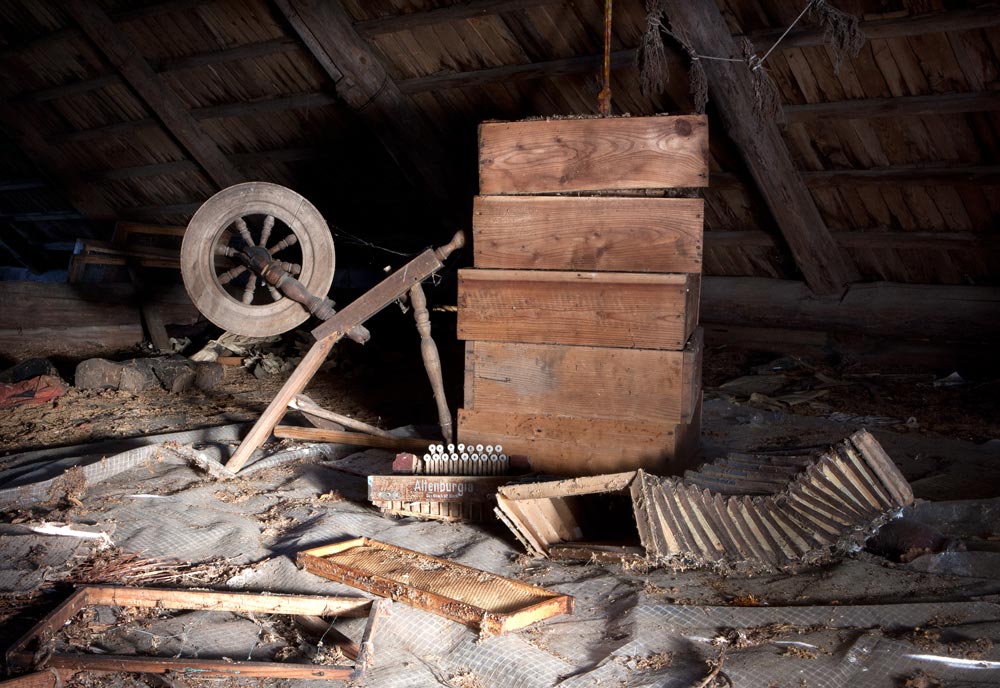
Spinning wheel, Bee hives and an broken accordion lie in the loft of the home of Helena Girvaite.Helena has one daughter who now lives in Velikiji Luki, Russia and works for the State Archive. She is married with two sons who also live in Russia. In a letter to her mother in 2002, she tells her that her eldest son, Juris, is about to get married to a Russian girl named Olga. He had just graduated from the military academy while her younger son was still in school. She wrote to her mother quite seldom and had invited her to travel to Russia but it seems that it did not work out. Helena was quite precise at recording details of the farm, such as dates when the hens were to be put on eggs and also kept track of the farm accountslendar on the wall is dated April 2010 which may give an indication of the last occupancy, while the hands of the clock have stopped at 10:04.Helena lived with her husband who died in 2002. He worked with tractors, ploughing land and travelling around local villages.
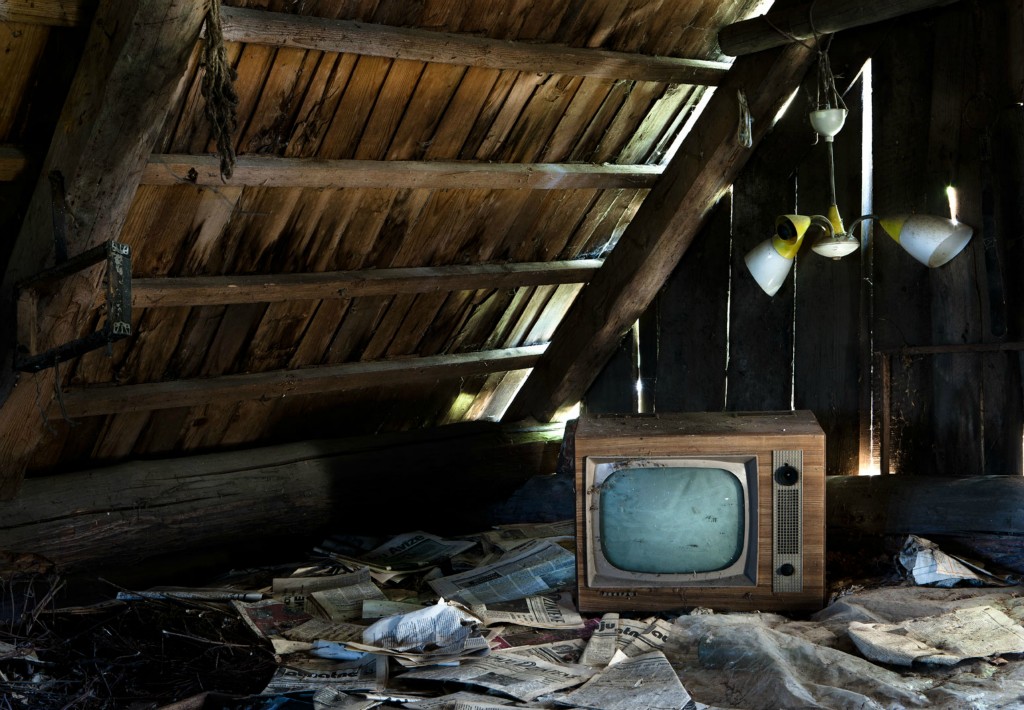
An old Television set lies in the loft of the home of Helena Girvaite.It is highly unlikely that Helena’s daughter will ever return to the land of her birth. Her mothers’ home is now a reflection of her life. In time the house will be reclaimed by nature and all that will remain will be dust.
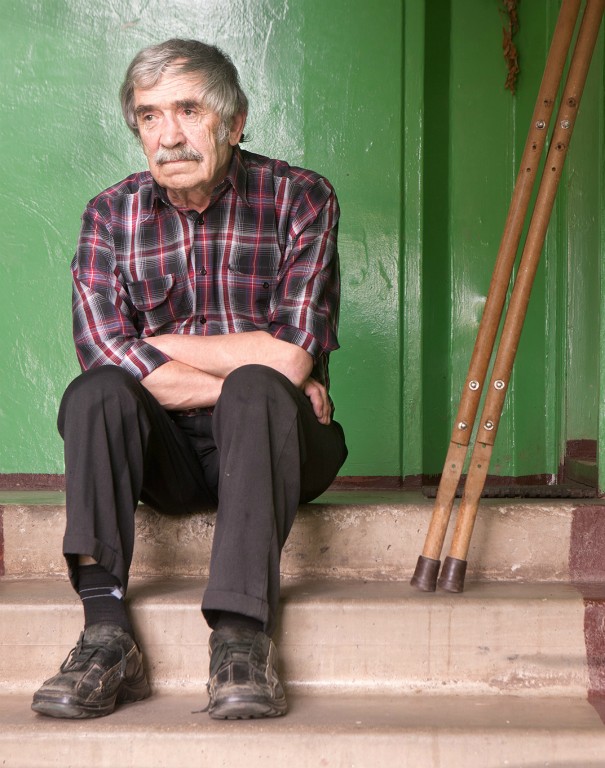
Juris Alhasovs (b. 1945) Juris was born in Vilnius after his mother travelled there from Riga, four months pregnant, riding on the roof of a train. The family stayed six months before moving to Dagestan, where they lived in his father’s village for six years and had four more children. They returned to Latvia when Juris contracted poliomyelitis, hoping for better treatment. He later began engineering studies in Saint Petersburg but had to abandon them due to his condition. He worked in a factory, never married, and now lives in the same apartment complex as his mother.
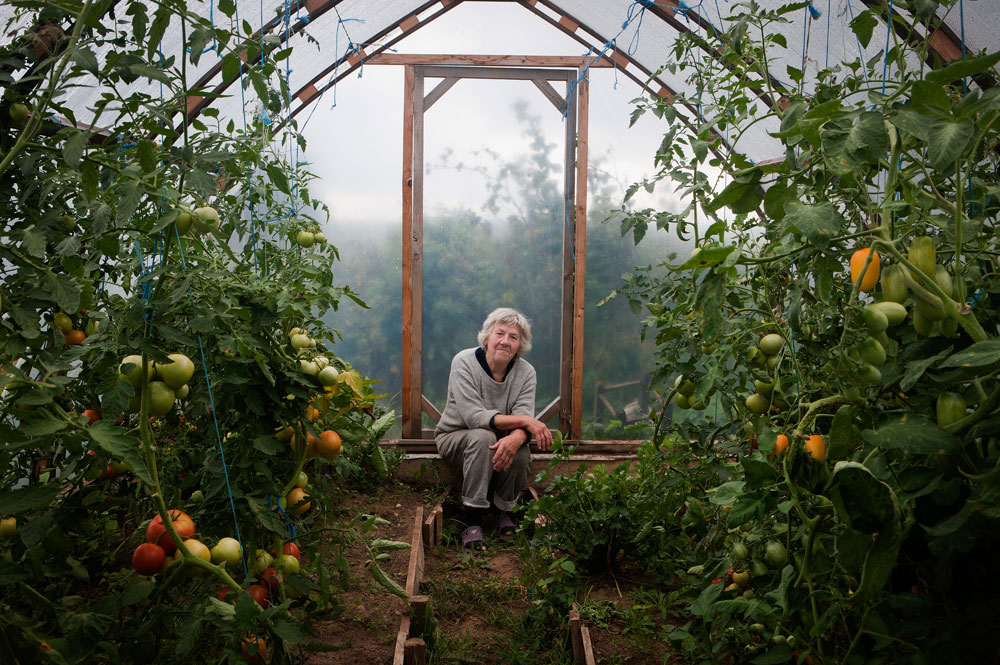
Anna Blūma (b. 1939); Anna sits quietly among her thriving tomato plants in the greenhouse she built herself—an oasis of colour and care on the farm where she now lives alone. Her life has been marked by displacement, war, and personal tragedy: forced from her childhood home near the Lithuanian border, twice made homeless, and later widowed after her husband Ernest was fatally attacked following his release from a Soviet Gulag. Despite the weight of memory, Anna finds solace in tending her garden. The tomatoes, vibrant and varied, are a source of pride and continuity—living proof of her resilience and the quiet dignity of survival.
Daina Kārkliņa (b. 1956) On a cold winter morning in December 1979, Daina went to the shed to work, unaware of the tragedy about to unfold. After finishing her tasks, she returned to the house and found it in darkness. When she stepped inside, black smoke and intense heat rushed out to meet her. She ran the two hundred metres back to the shed and called for help from her neighbours. They managed to remove her three children—Aiga, Andris, and Mareks—from their beds, but it was already too late. When the medics arrived, they tried to resuscitate them, but there was nothing more they could do. “It was the worst day of my life,” she said.The tragedy placed enormous strain on her marriage, and she eventually divorced her husband. Five years later, she remarried and now has three children.
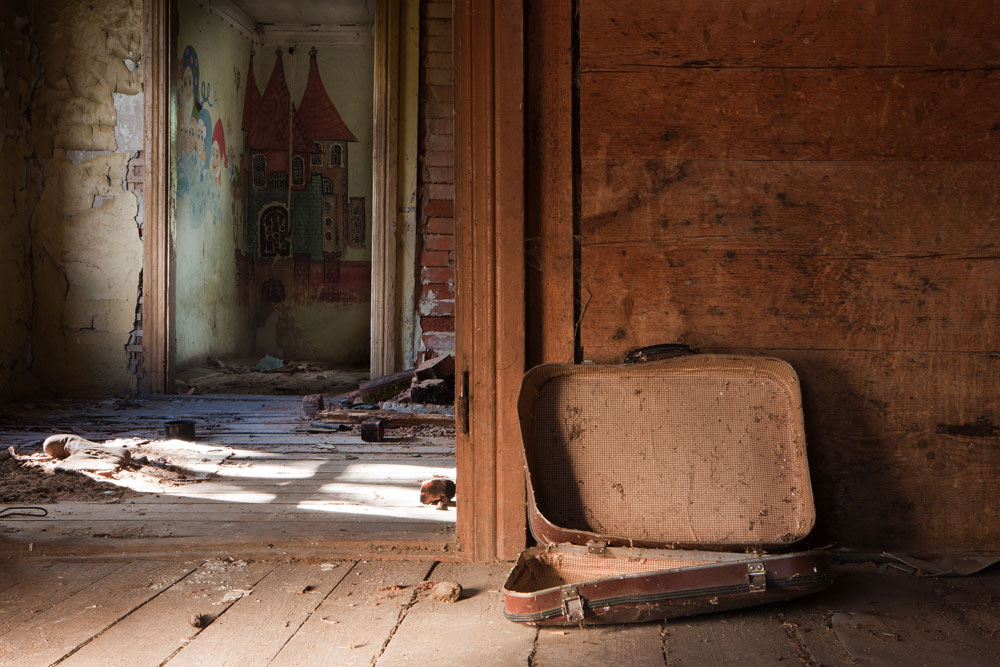
The harrowing partition of families can be witnessed in empty homes that are scattered throughout the countryside, some stripped bare. Here an old broken suitcase is all that's left in a hallway of an abandoned house near Skrunda.
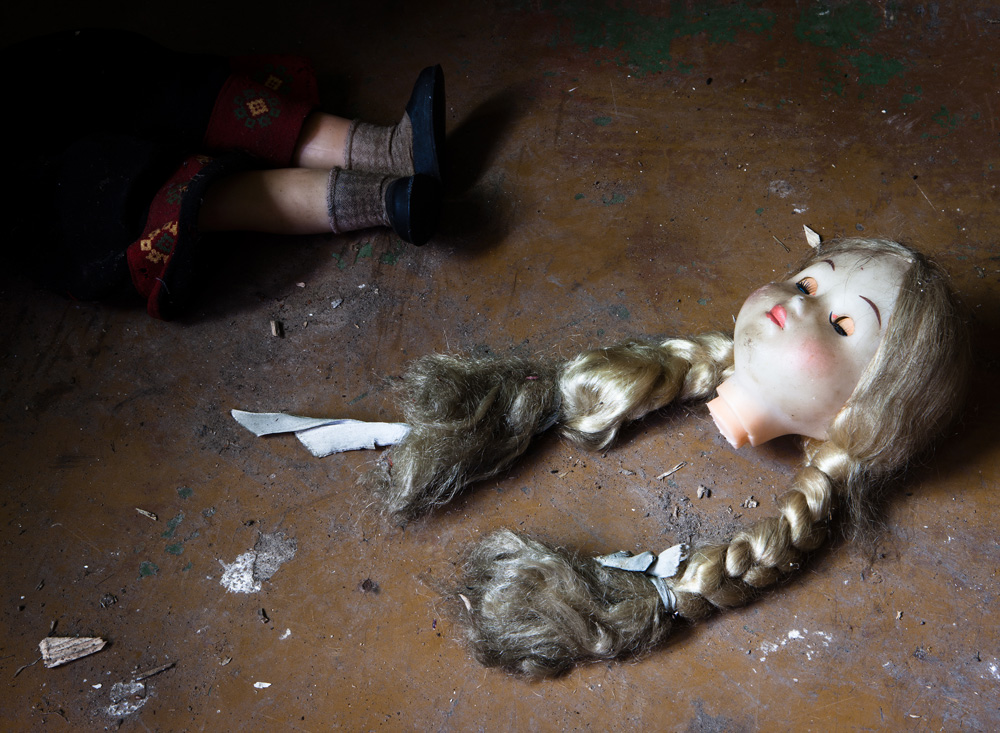
A doll now broken lies on the floor of an abandonded home near Kuldiga
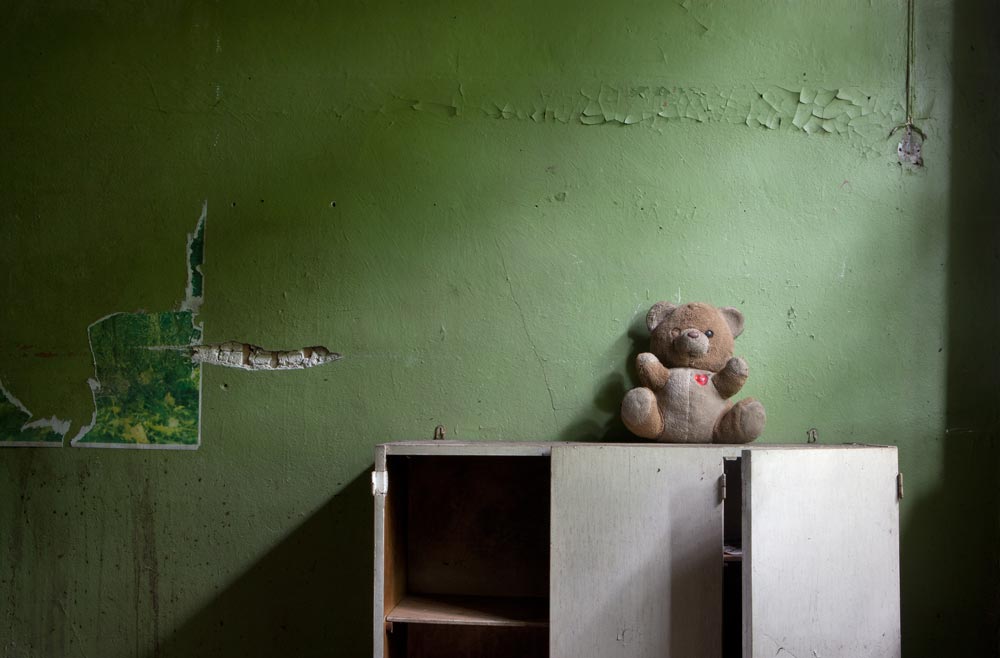
In the bedroom of an abandoned home a forgotten Teddy Bear sits on top of a dressing table
Jars of pickles on a shelf in a basement of a home near Skrunda.
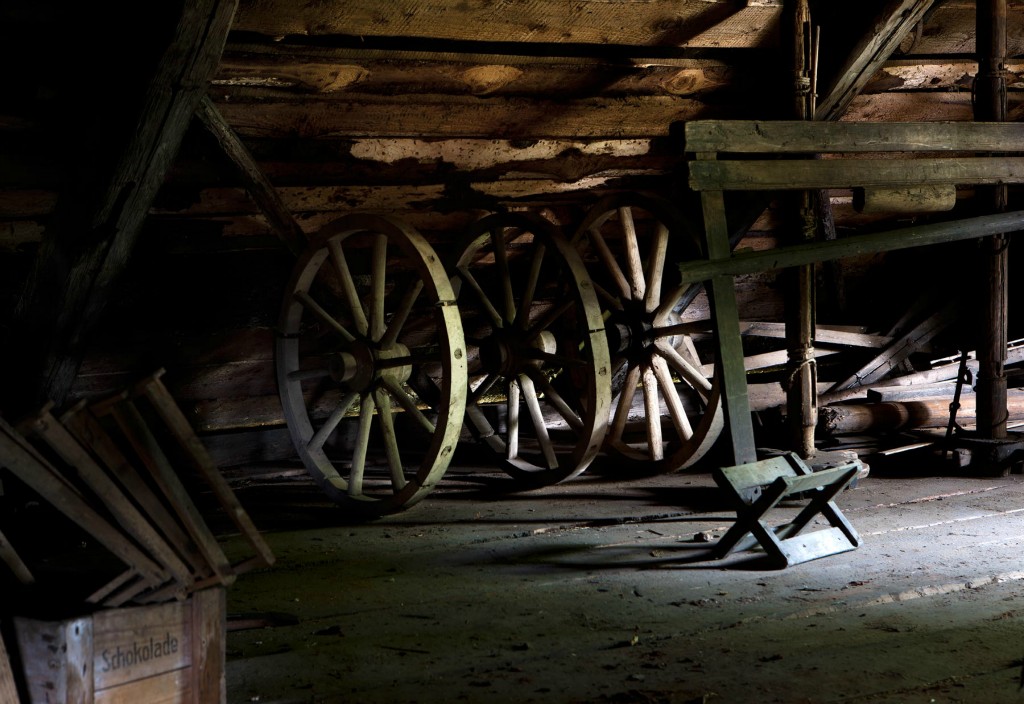
Wagon wheels stored in the loft of a home, a throwback to past days.
Valdis Freimanis (b. 1953); Before the collapse of the Soviet Union, Valdis worked on a collective farm. After the Soviet occupation in 1940, land ownership of over 30 hectares was nationalised. According to Valdis, collective farming was very stressful, as farm life was dictated by the need to meet set quotas. After independence, he turned to dairy farming, which he found too difficult. He says, “The problem now is that all the young people are leaving for Riga and abroad, and there’s nobody left to pass on skills to.”
Lūcija Cāzere (b. 1931)
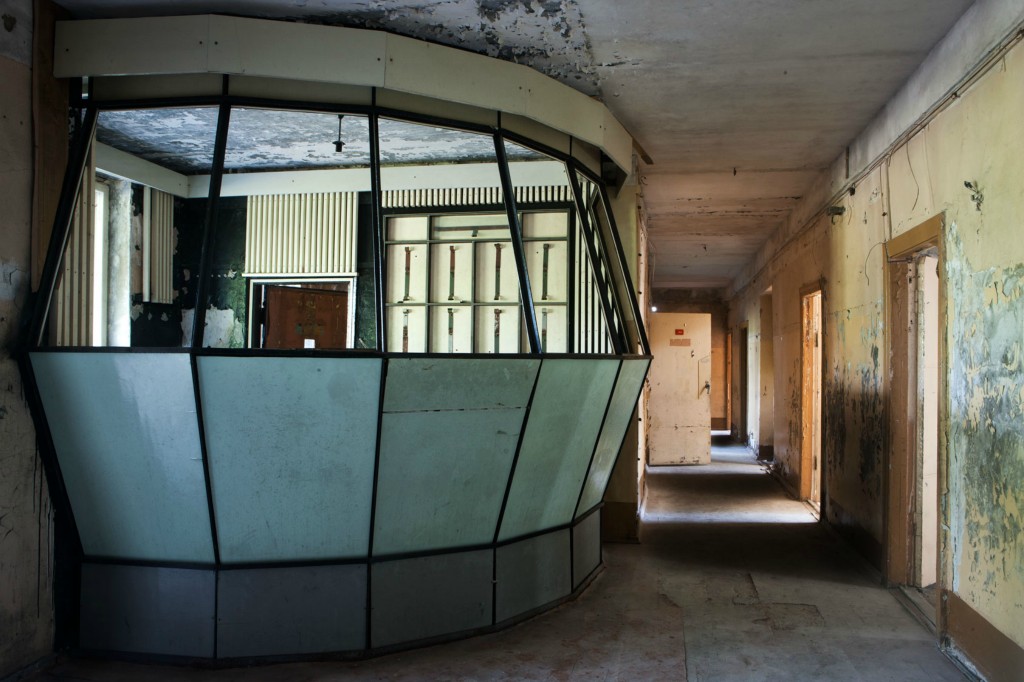
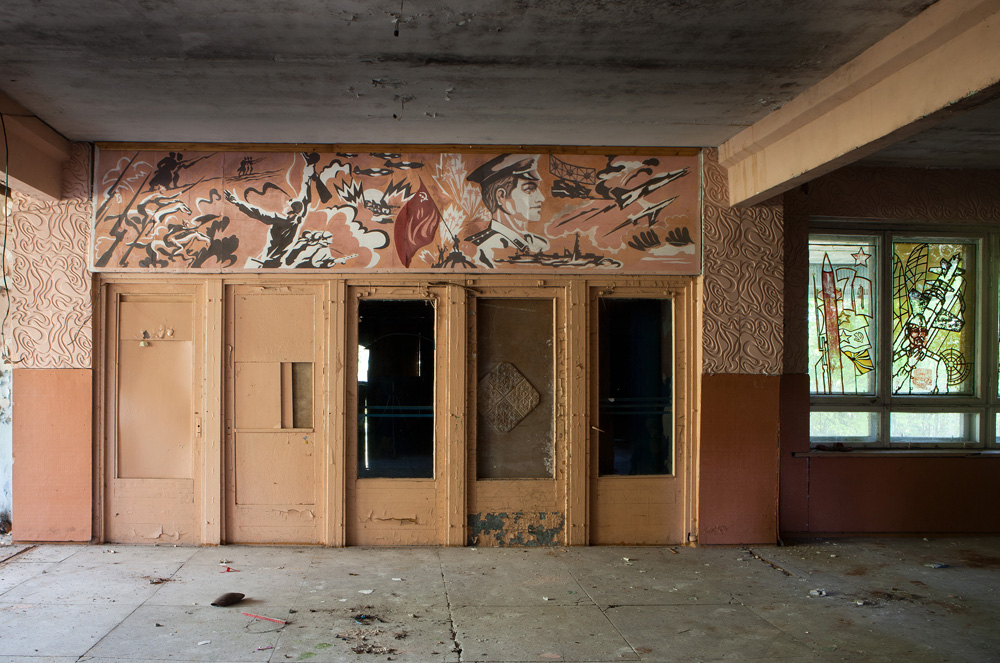
Skrunda-1; During the Cold War the Soviet Union built more than 40 secret towns. One of these secret towns was located in Latvia outside the town of Skrunda in Raņķi parish and named Skrunda-1. This secret military town which was not marked on any Soviet maps was used for the location of two Dnepr radar installations also know as “hen-house” radar. This former Soviet radar station is now a ghost town. Constructed in the 1960’s the site played a strategically important role during the Cold War as an early warning system designed to track incoming ICBM’s.
_0141255-Edit
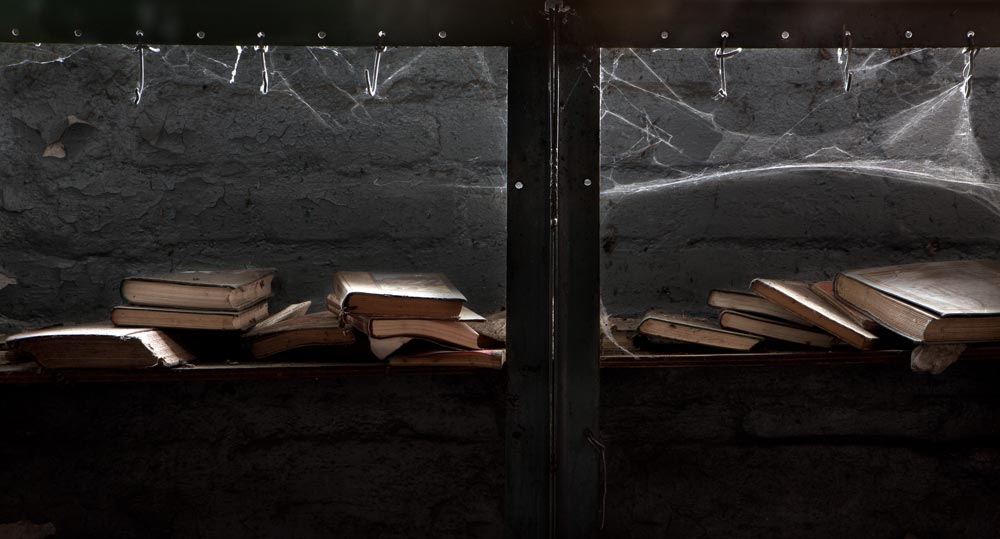
Skrunda-1; Boiler House Skrunda-1; Books and manuals lie in a case gathering cobwebs of the Boiler-house office at Skrunda-1
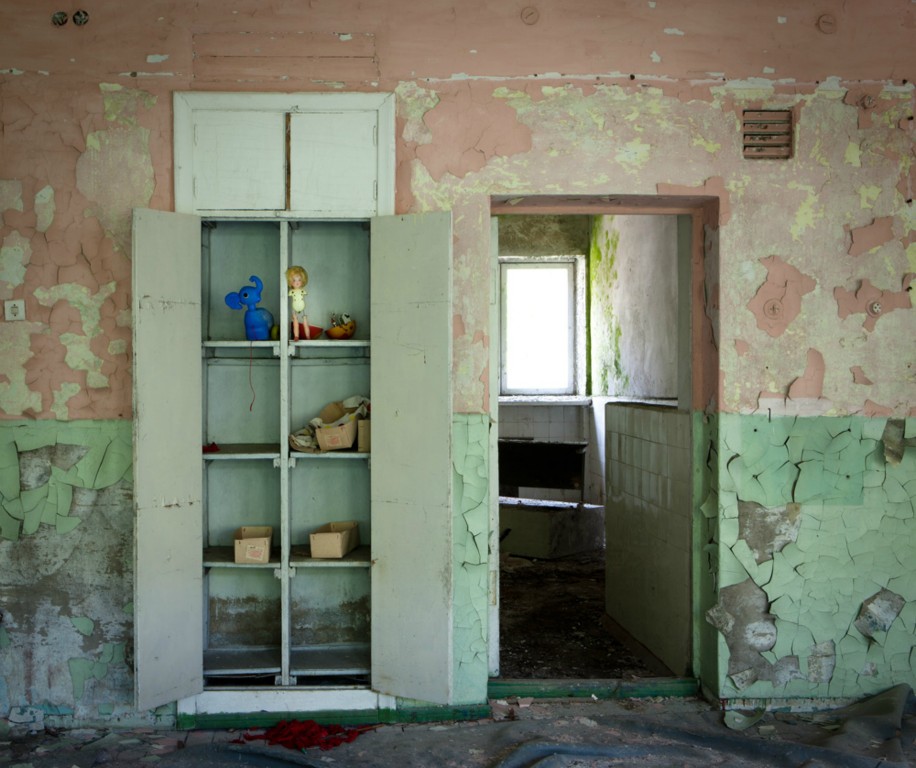
A now empty school classroom at the former Soviet base at Skrunda-1
Cinema Foyer, Skrunda-1; This vast complex of 1,072 hectares had a cinema, nightclub, it’s own hospital and a school to cater for its 5,000 inhabitants. After the collapse of the Soviet Union Skrunda-1 closed and the last members of the Red Army left in 1998. In 2010 the town was sold for private development but still stands empty today.
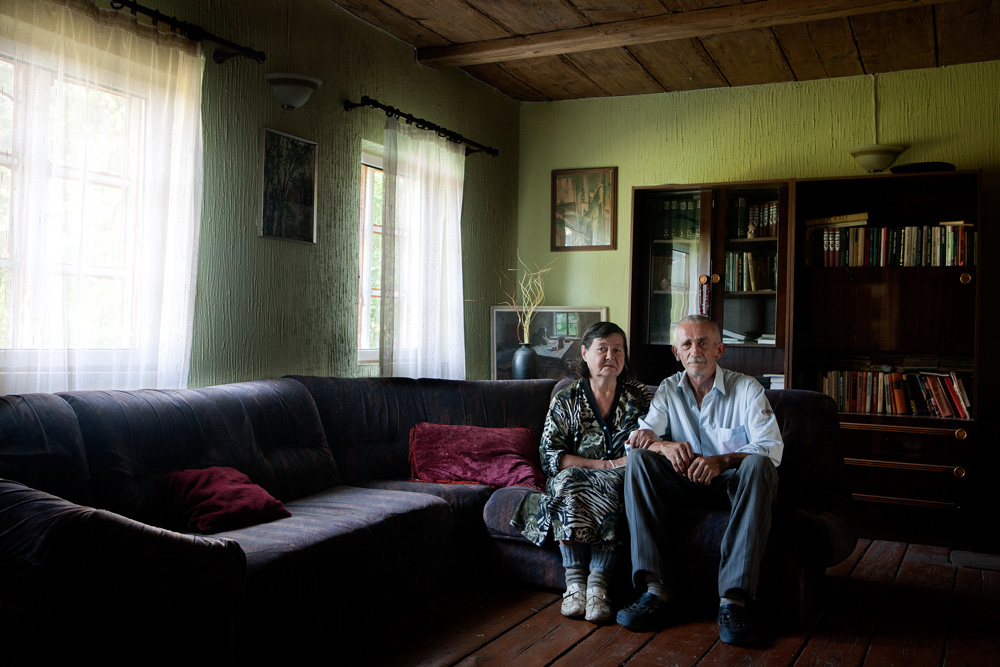
Anita Ruke (b. 1955), Valdis Rukis (b. 1955); Anita first met Valdis in Kindava when he came to visit her twin brother. She was working in a shop at the time, and Valdis would stop by regularly to see her. They married in Ventspils when Anita was 21. In 1981, they bought the house where they still live, and after the collapse of the Soviet Union, they acquired the surrounding land. The couple divorced in 1988 but reunited in 2005 after the tragic death of their son. They now grow vegetables for their own use and do not earn income from the farm. Valdis picks up casual work when he can, but it’s difficult to rely on it as a steady source of income.
Felikess Grickevics (b. 1954), Tatjana Sapko (b. 1953) Felikss and Tatjana spent thirteen years working for a Romani baron in Riga, living within a communal settlement. When the baron relocated, they found themselves unemployed and without a home. For over a year they moved from place to place until a relative suggested they join Lena’s church commune in Skrunda, where they’ve now lived for two years. Together for thirteen years, they married in January 2013. Within the commune, they handle housekeeping duties and serve as caretakers for the church. The rules are strict: members are prohibited from using electronic communication devices or watching television and films, though Christian radio is permitted.
Biruta Gustovska (b. 1935) Biruta was born in Limbaži, Vidzeme, in 1935. She remembers her family hiding fugitives during the war. She recalls the German soldiers as polite and well-mannered, in contrast to the Russian army personnel, whom she describes as poorly educated and often rude. “After the war, the Russians took everything and turned our farm into a Kolkhoz, which they named Rainbow. We had no freedom—people were always watching and reporting to the authorities, so you had to be careful. We didn’t celebrate Christmas because we feared being reported.” After the Russian Revolution, Christmas celebrations were discouraged, and for public officials, participating could have serious consequences.
Zofija Guravska (b. 1922); “Hanging in my wardrobe is the dress I want to be buried in,” says Zofija. She lives alone with her dog, tending a small vegetable garden and a few hens. The house belonged to her parents, and she has lived in it her entire life. Her husband died twenty-five years ago after thirty-two years of marriage. Though friends and family urge her to move to a modern apartment, she refuses. “My parents, two brothers, and my husband all died in this house—so why should I leave? I’ve lived here all my life and I know I haven’t much time left. What they don’t understand is that I’d much rather die in my own home than somewhere unfamiliar. I’ve only left the district once, and that was to visit Riga as a schoolgirl.
The last burial in the old German cemetery in Kurmāle parish was of an infant in 1939. Today, the graveyard is largely forgotten, remembered only by a few locals. Headstones lie broken, felled by trees, and the site is slowly being reclaimed by nature. In October 1939, Germany signed an agreement with Latvia to facilitate the repatriation of Baltic Germans. Around 60,000 Latvian citizens of German descent left the country—most never returned. - “Farewell… I will dream of you still as a baby,Treading the earth with little strong toes,The earth where already so many lie buried.This song to my son, is come to its close.”—Pavel Antokolsky